Most tropical bedrooms go wrong in the same way: they pile on palm leaves, bamboo blinds and a flamingo or two until the room looks like a gift shop. Tropical decor ideas for small bedrooms work better when they borrow the mood of a rainforest early in the day, with green-filtered light, damp air, and quiet. A few well-chosen pieces can carry that mood, and a small room has little space for anything else anyway.
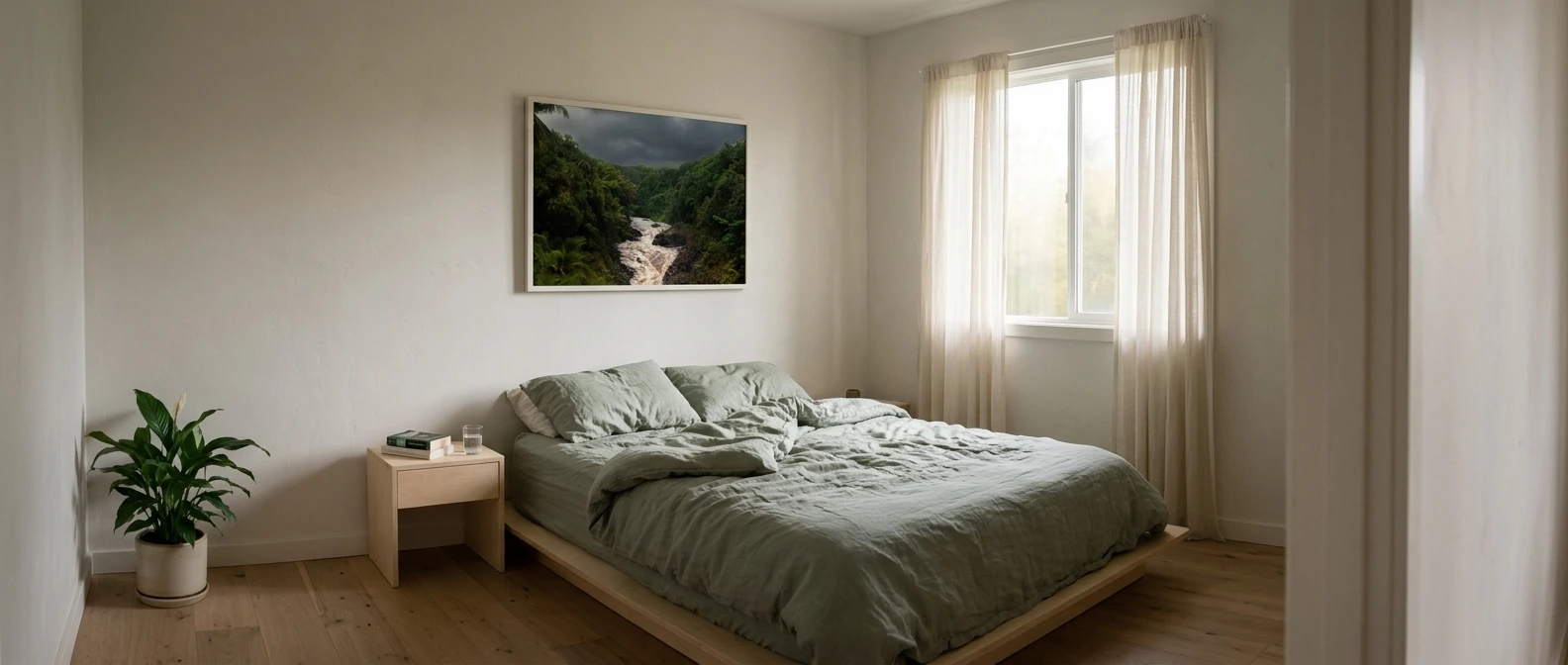
Start with the feeling of a rainforest morning
Before you buy anything, think about what that morning is actually like. The light is soft and comes from above and from the side. Everything is green, brown and grey-gold, and nothing is bright. Surfaces are matte and a little rough, and there is plenty of empty space between the plants.
Those qualities are what you are after: low contrast, muted color, natural material, and light that never hits you directly. A single palm-leaf cushion tells you nothing about the forest. A room that is dim, green and uncluttered tells you a lot.
It helps to carry that picture into every choice. When you hold up a throw pillow or a lamp shade in the shop, ask whether it belongs in that morning. If it would look more at home on a cocktail menu, leave it there.
A soft green and warm neutral palette that keeps a small room open
Small rooms feel larger when the colors sit close together in tone. Choose one soft green as the leading color: sage, eucalyptus, moss or a grey-green that looks almost like lichen. Pair it with warm neutrals such as oatmeal, cream, sand and pale wood. The green gives the room its character, and the neutrals stop it from feeling heavy.
You do not need to paint every wall. If you can paint, one wall in a muted green behind the bed works well, and the other three can stay a warm white. If you rent or prefer not to paint, bring the green in through bedding, a curtain or a large rug. Bedding is the biggest block of color in a bedroom, so linen or cotton in a washed green does a lot of the work alone.
Keep bright, saturated tropical colors, like hot pink, orange and lemon yellow, out of the main scheme. They have a place in a hotel lobby. In a small bedroom they raise your energy when you want it lowered. If you want a warm accent, pick a dusty terracotta or a soft clay, which look natural next to green.
Let one large rainforest print do the talking above the bed
The wall above the bed is the first thing you see when you walk in and the last thing you see at night, so it is the right place to set the tone. One large piece does more than a gallery of small ones. A cluster of small frames in a small room reads as visual noise, and a single big image reads as a window.
Choose a print with plenty of depth: layered fronds, mist between trees, a canopy seen from below. Images with a muted palette of greens and soft browns suit a bedroom best. Very busy leaf patterns with sharp contrast can feel loud when you are trying to fall asleep.
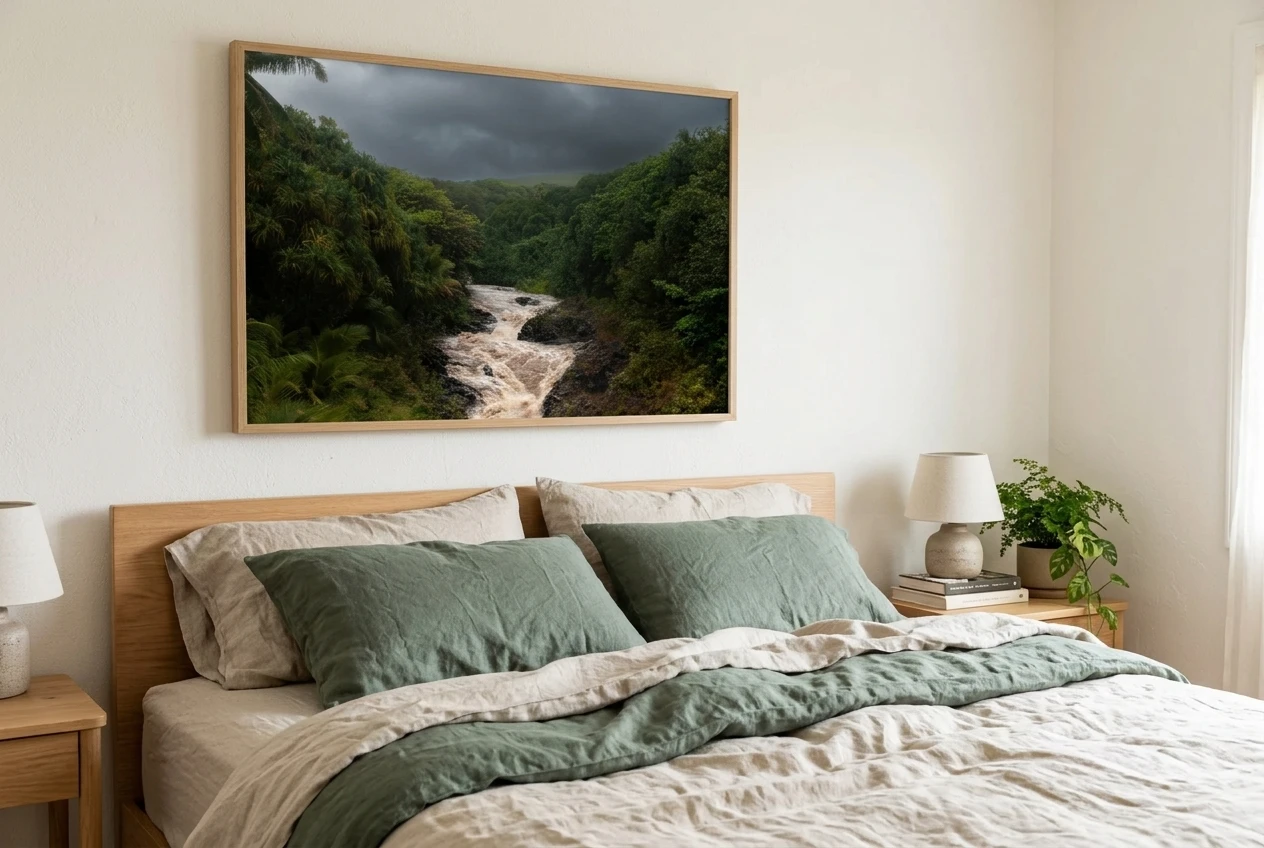
A common guideline is that art above a bed should be roughly two-thirds to three-quarters of the bed’s width. Hang it a few inches above the headboard so the two read as a single group. If the piece is wider than you expected, that usually looks better than one that is too small, which tends to float and look lost.
Frame choice matters too. A thin natural wood frame or a plain white one keeps the focus on the image. Heavy gold or ornate frames pull the room toward formal, and that works against the calm you are building.
Natural textures: rattan, linen, bamboo and wood in small doses
Texture is what makes green feel like nature and not like a paint swatch. Rattan, linen, bamboo and wood all bring a slightly rough, uneven surface that catches light softly. In a small room, use each of them once or twice and let them stand apart.
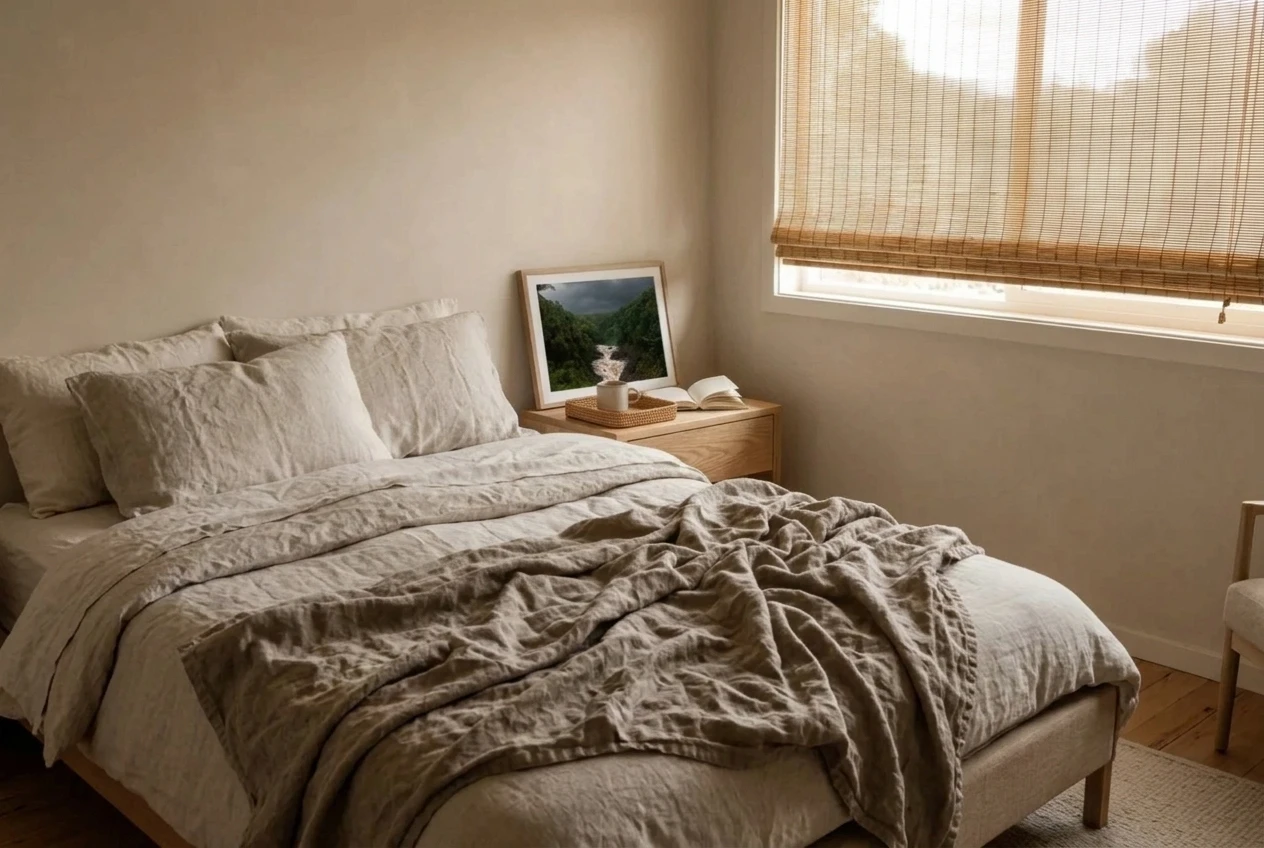
Some practical places to use each:
- Linen: bedding, curtains, or a loose throw at the foot of the bed. It wrinkles, and that gives the room a lived-in look.
- Rattan or cane: a bedside tray, a headboard panel, a lamp base, or a small chair. One piece is enough.
- Bamboo: a roman shade or a narrow shelf. It filters light, which suits the canopy idea.
- Wood: a bedside table or a bench in a light or mid tone with the grain visible.
Stay with small doses because natural materials are visually strong. If the headboard, the shades, the bedside table, the baskets and the mirror frame are all woven or wooden, the room starts to look like a catalog set. Two or three textures, repeated lightly, look collected over time.
A soft wool or cotton rug beside the bed also helps. It adds warmth underfoot and absorbs sound, and quieter rooms feel calmer.
Plants that suit a bedroom, and where to place them without crowding
Plants are the obvious way to make a room feel like a forest, and in a small bedroom they are also the easiest thing to overdo. Three or four plants of different heights is usually enough. Giving each one a clear spot with air around it looks better than packing them together.
Easy choices for a bedroom include:
- Snake plant: upright and tidy, and it tolerates low light and irregular watering. It fits in a narrow corner.
- Pothos: trails from a shelf or the top of a wardrobe and softens hard edges. It grows in a range of light conditions.
- ZZ plant: glossy leaves and a forgiving habit, which suits a room with limited daylight.
- Parlor palm: a gentle, feathery shape that looks the most like a rainforest understory.
Pothos, peace lilies and some other common houseplants can be harmful if pets chew them, so check each plant against any animals in your home before buying.
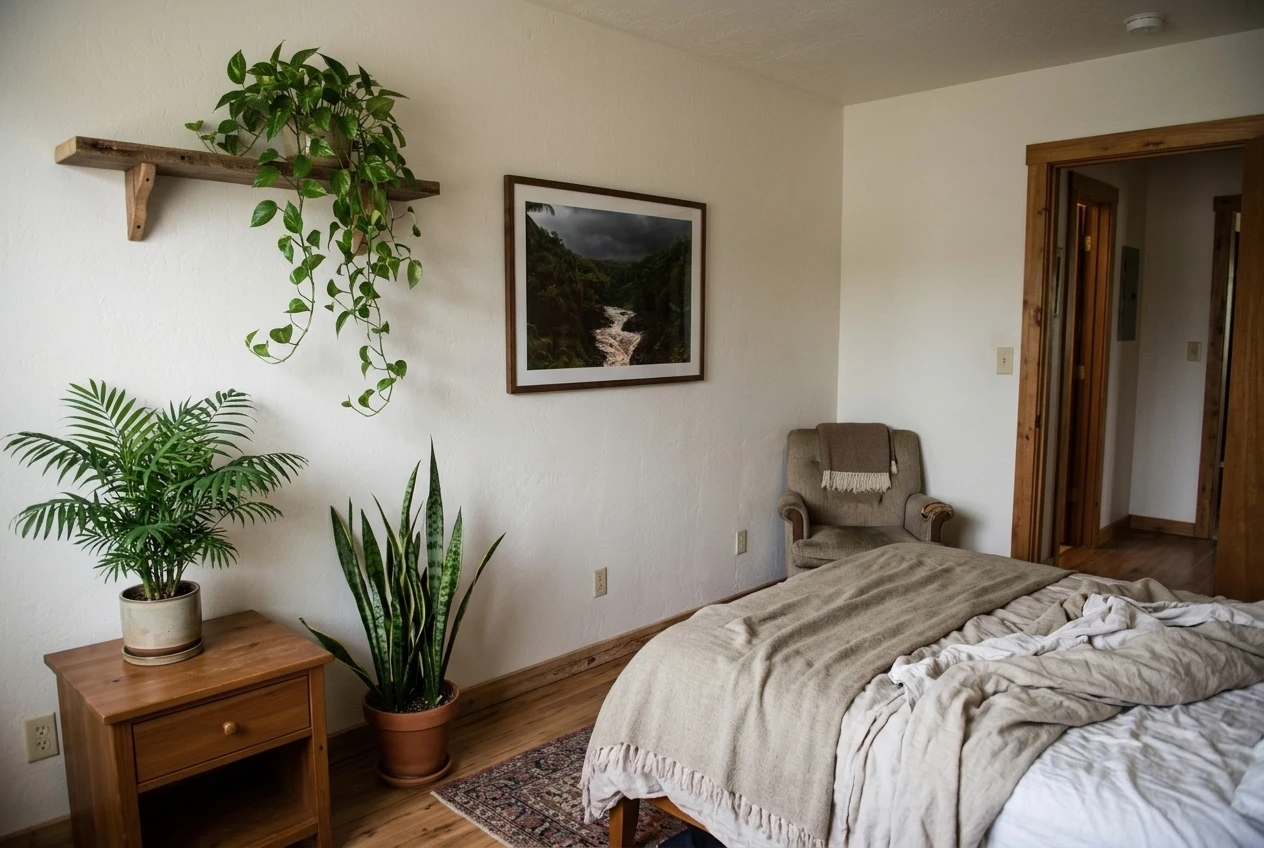
For placement, use height. A floor plant in a corner, a plant on the bedside table or windowsill, and one trailing plant up high make three levels without taking much floor space. Keep the path from the door to the bed clear, and keep the area right around the bed free so you are not brushing leaves when you get up.
If you do not have a spot with enough light, or you do not want to keep plants alive, a single large dried or preserved branch in a floor vase gives a similar shape. The large print on the wall also does a good share of the plant work, so the room never depends on live plants alone.
Dappled, low light: lamps and bulbs that mimic filtered canopy light
Overhead light is the quickest way to ruin a calm bedroom. A single bright ceiling fixture flattens everything and makes the room look like an office. Rainforest light is soft and comes from several directions, so use more than one low source instead.
A simple setup for a small bedroom:
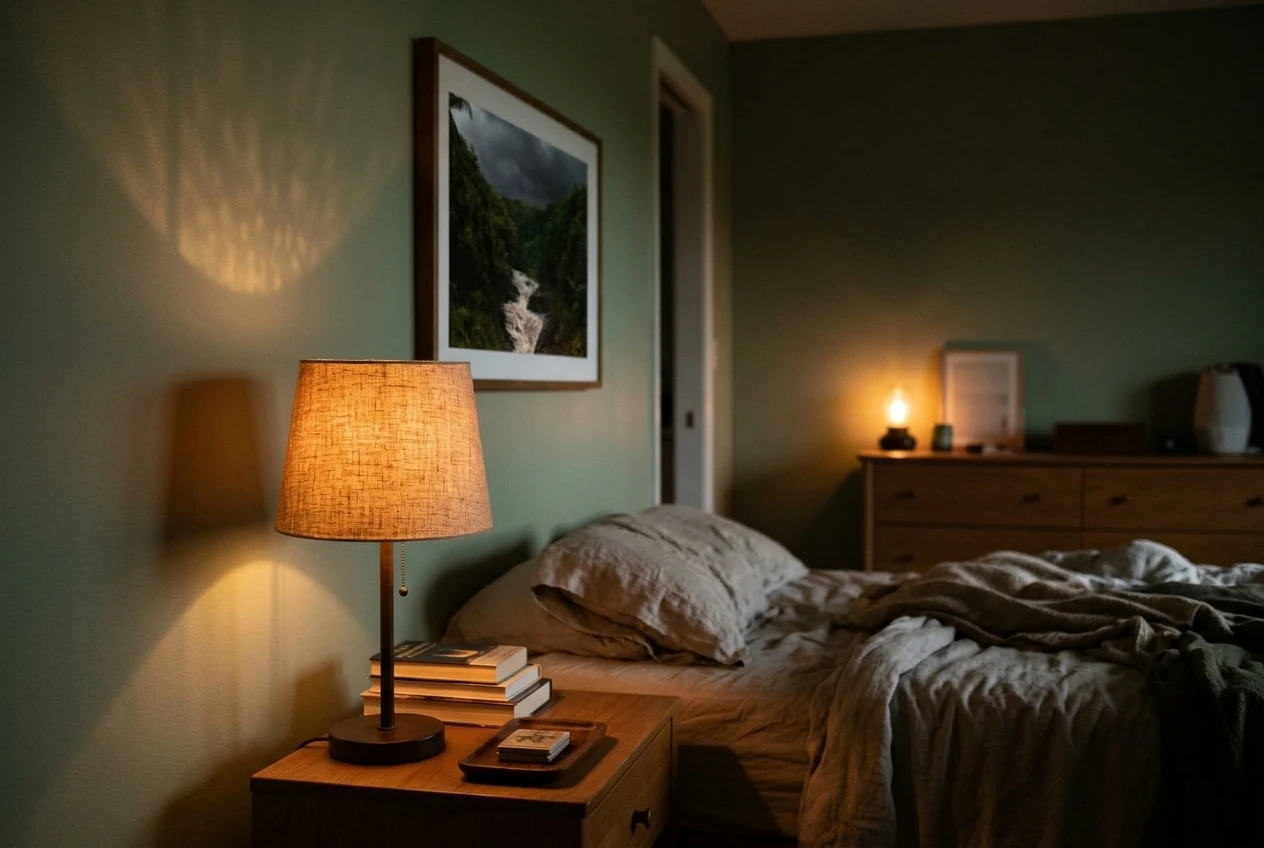
- A lamp on each side of the bed, or one lamp and one wall light if there is no room for two tables.
- A small lamp or string of warm lights on a shelf or dresser to light a different height.
- A dimmer on the main light if you can fit one, or a plan to leave the ceiling light off in the evening.
Choose warm white bulbs, usually labeled 2700K, so the light is amber and gentle and not blue-white. Look at the lamp shades as well. Linen, paper and woven shades spread light softly and cast a faint pattern on the wall, which comes close to light moving through leaves.
If your window gets daylight, keep the curtains light and let the sun filter through. Sheer linen in white or a pale green turns harsh midday light into the kind of diffused glow that makes green walls and plants look good.
What to leave out so the room stays restful
Leaving things out matters as much as bringing things in, especially in a small room. Several common additions work against the calm:
- Obvious theme objects. Wooden tiki masks, plastic palm trees, flamingo prints and “paradise” signs make the room read as a theme.
- Too many patterns. One leaf print in the room is enough. Plain fabrics around it let the art stand out.
- Visible clutter. Baskets, closed storage and a clear bedside table do more for calm than any decoration. Cables, piles of clothes and open shelves of small objects all add visual noise.
- Bright screens and glossy surfaces. Mirrors, glass and shiny metal bounce light around and break up the soft, matte feel. One mirror is fine, and a mirror across from the window can help a small room, but too many surfaces glare.
- Fake plants that look fake. If you cannot keep live plants, use a dried branch or leave the space empty. Cheap plastic leaves undo the natural feeling.
A good test is to stand in the doorway and look at the room for a few seconds. If your eye jumps from object to object, remove something. If it settles on the wall art and then rests, the room is ready.
A gentle order to build it in, one change per weekend
Doing everything in a single weekend usually leads to buying things that do not fit together. Spreading the work out lets you see how each change feels before you make the next.
- Weekend one: clear and calm the base. Take everything off surfaces, remove what you do not use, and choose your green and neutral colors. Wash or replace the bedding.
- Weekend two: hang the large print. Pick the piece, frame it, and put it above the bed. This sets the tone, and every later choice can respond to it.
- Weekend three: sort out the light. Add warm bulbs, a second lamp, and softer curtains or shades.
- Weekend four: add texture. Bring in one rattan piece, one wooden piece, and a linen throw or curtain.
- Weekend five: bring in the plants. Start with two, place them at different heights, and add a third only if the room has space.
After each step, spend an evening in the room. You will often find that you already have enough, and the best tropical decor ideas for small bedrooms are usually the ones that stop early.
Browse the rainforest and botanical prints in the Rooms & Prints collection to find the one piece that sets the tone for your bedroom.
Leave a Reply